Tag Archives: 2022

So Many Fish!

Hey guys! It’s Michiel again; I’m sure you all missed me : )

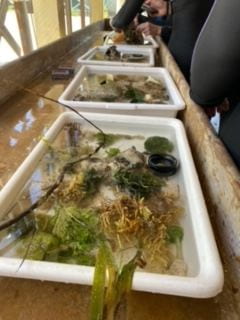
This morning started the same as every other morning here. I woke up, got ready, and joined the others for breakfast in the dining hall by 7. After breakfast, everyone in the class put on their snorkeling gear and went out into a new area of the water that’s behind the dining hall. It was full of sea grass and very shallow, but our goal was to find as many interesting species as we could and put them in a bucket. Some notable finds were a lobster, Diadema antillarum (a sea urchin with an interesting history), a sea anemone, and several crabs. In regards to herbivorous fish, though, we caught a Cocoa Damselfish (Stegastes variabilis), and a Bicolor Damselfish (Stegastes partitus). These fish are actually very territorial, so we saw them chasing and trying to bite one another in the bag. Once we laid out all of the species we caught in the wet lab, every person presented on the species caught within their taxa. We passed around lots of algae and talked a lot about different corals; it was so much fun!

After this, we took a break for lunch before going out on a boat in our snorkeling gear to work on a new research question we had come up with earlier in the day. We are trying to identify the correlation between sea urchin prevalence in a reef and the percentage of dead coral in the reef, and we want to see how this changes between Marine Protected Areas and other areas. We went to a reef that wasn’t in an MPA and tried to measure the percentage of dead coral in the area we were looking at using transects and quadrats. However, the waves were really strong and the reef was shallow, so Ava and I kept getting pushed into coral. After collecting this set of data, everyone collected sea urchins for 10 minutes, and we actually found 18 of them!

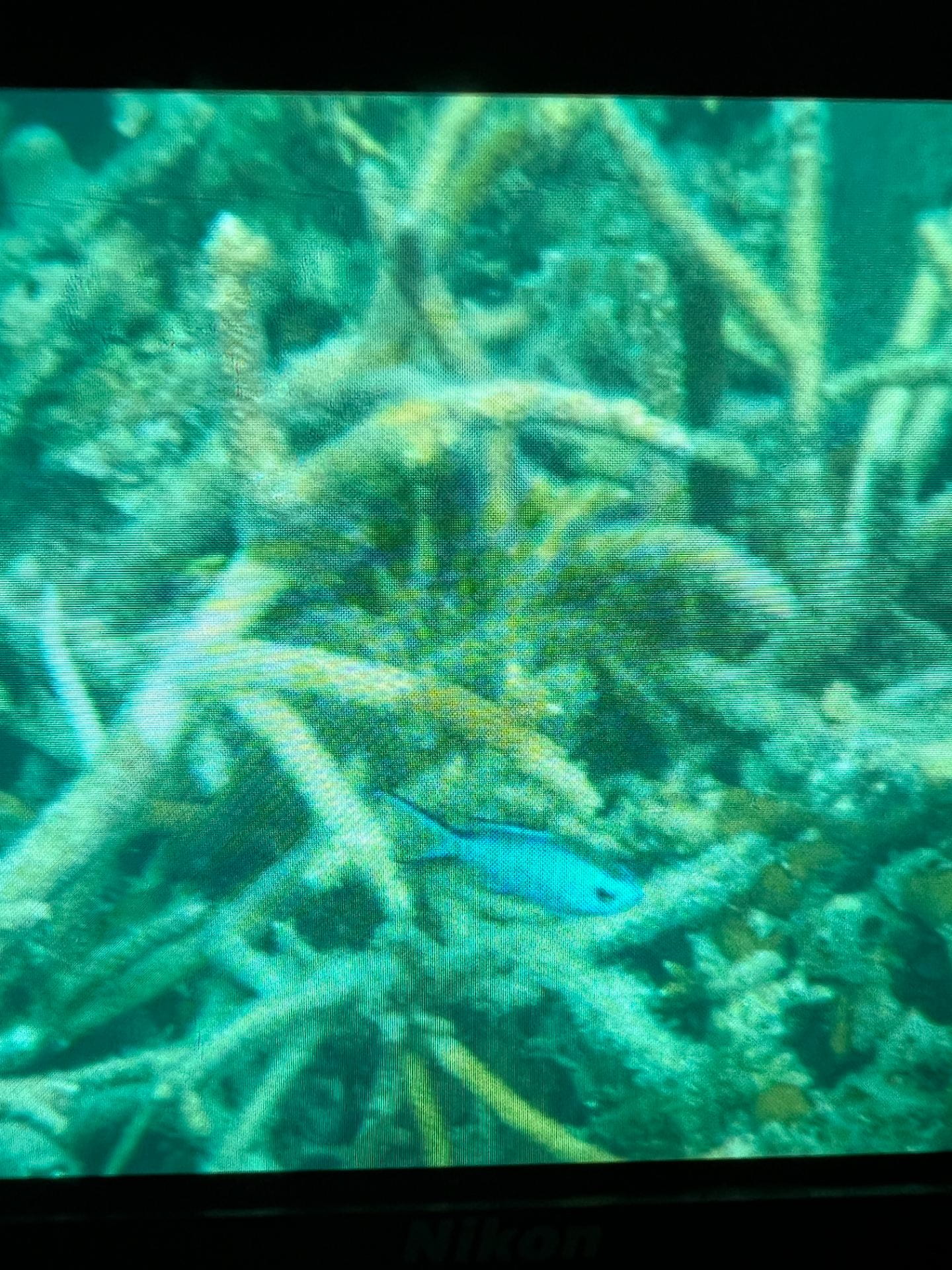
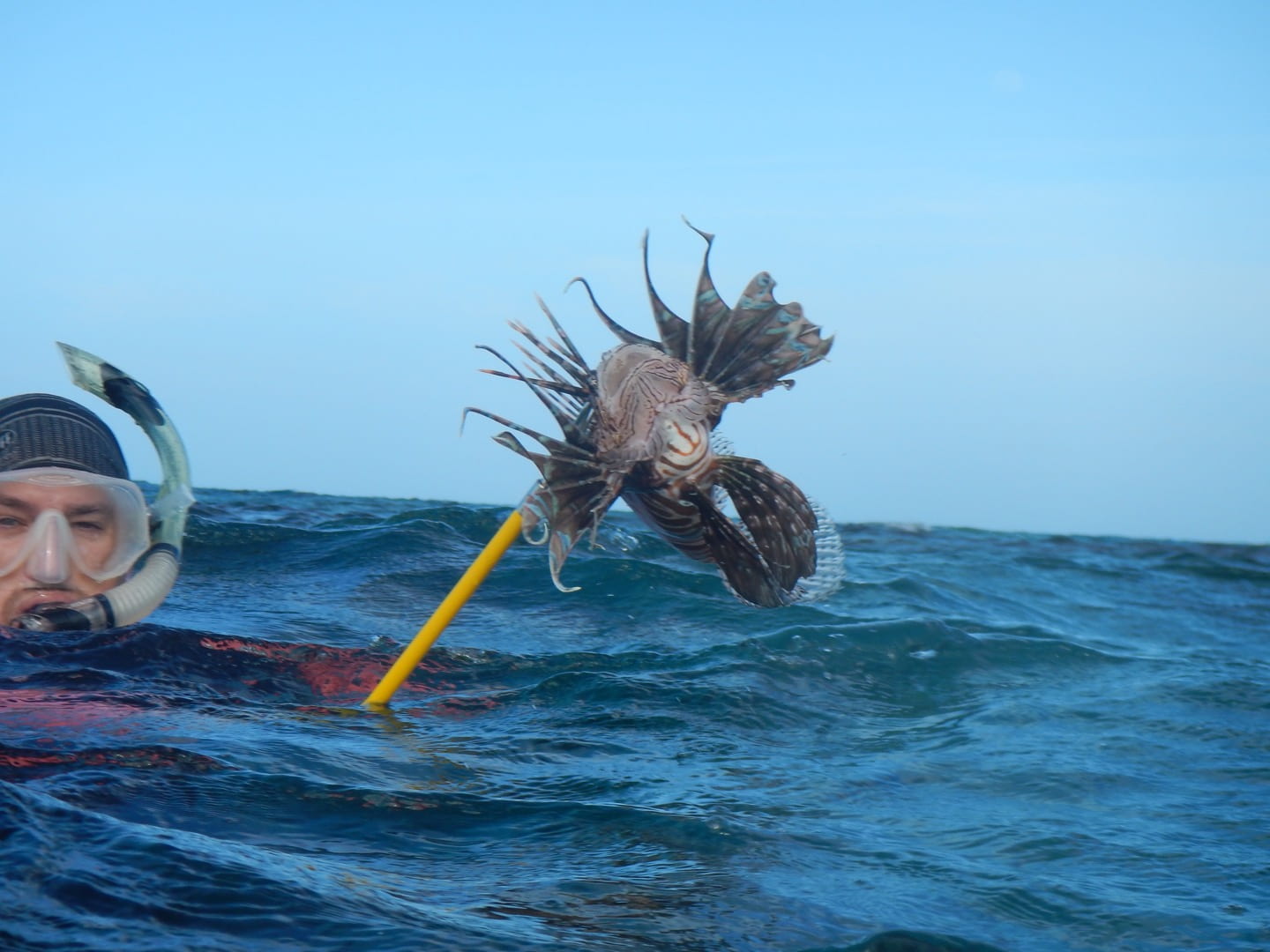
With our urchins and data collected, we left this reef and went to a new reef that was in an MPA. However, since the wave conditions were so harsh, we just snorkeled instead of collecting data. This reef was really nice. It had a bunch of fish diversity. I had a lot of people coming up to me asking about fish they saw (they mostly saw Yellowtail Damselfish and Blue Tangs). Unfortunately, I saw neither of these, but I did see a Blue Chromis (Chromis cyanea), which is beautiful, and some Threespot Damselfish (Stegastes planifrons). These kept staying very close to the coral, hiding in the crevices as I approached. They tend to do this because they’re pretty small, so they’re great prey for larger fish and are therefore more likely to hide when approached by something larger than them. We also saw a huge lionfish that Scott speared and took with us back to the island! Hopefully we will be feasting on lionfish ceviche tomorrow.

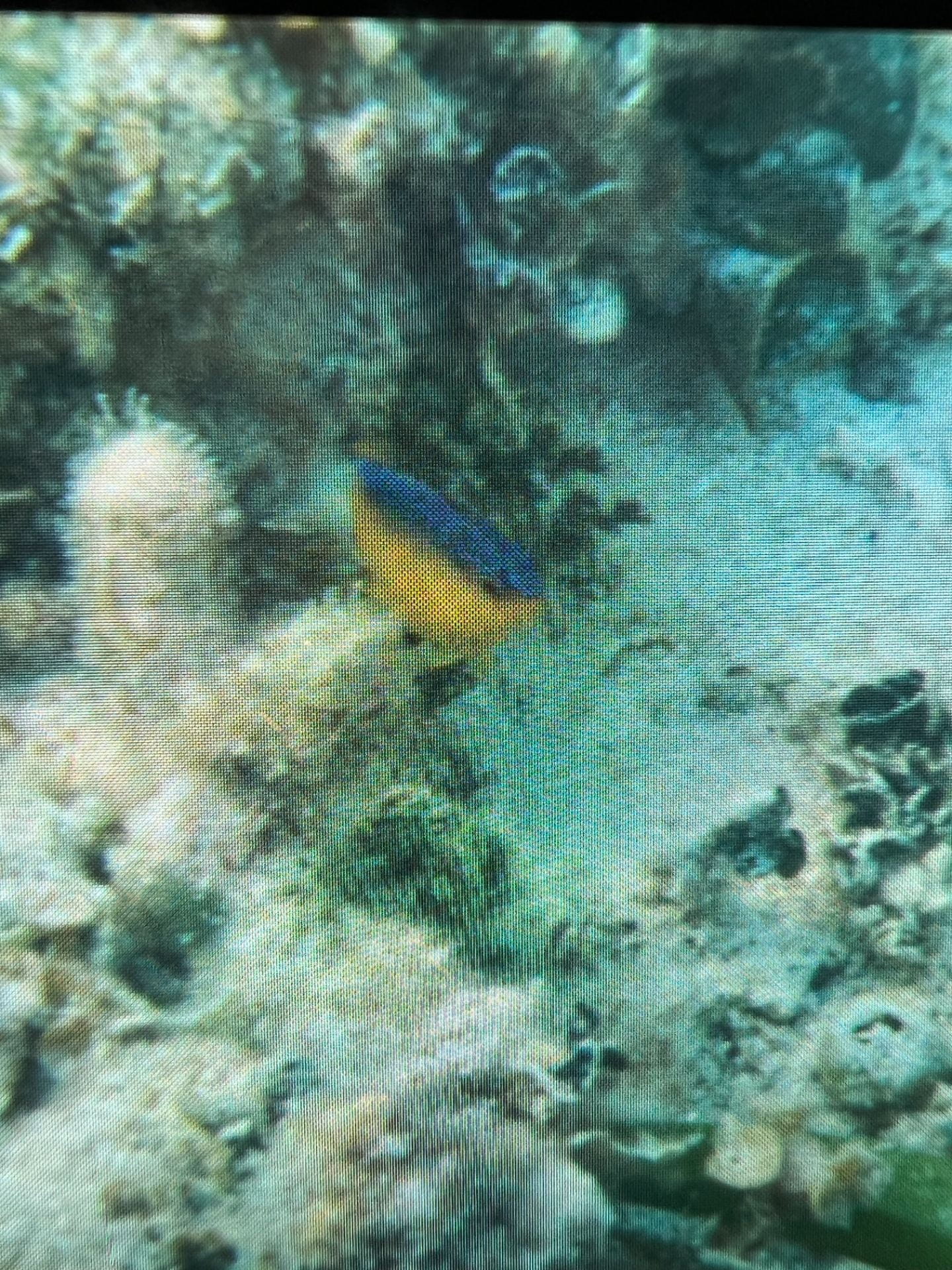
That was most of my day! We had some presentations in the evening that were very interesting (as always), but now it’s time to rest in preparation for tomorrow. Have a great night, guys! (Also here are my very feeble attempts at taking pictures of some of these fish).
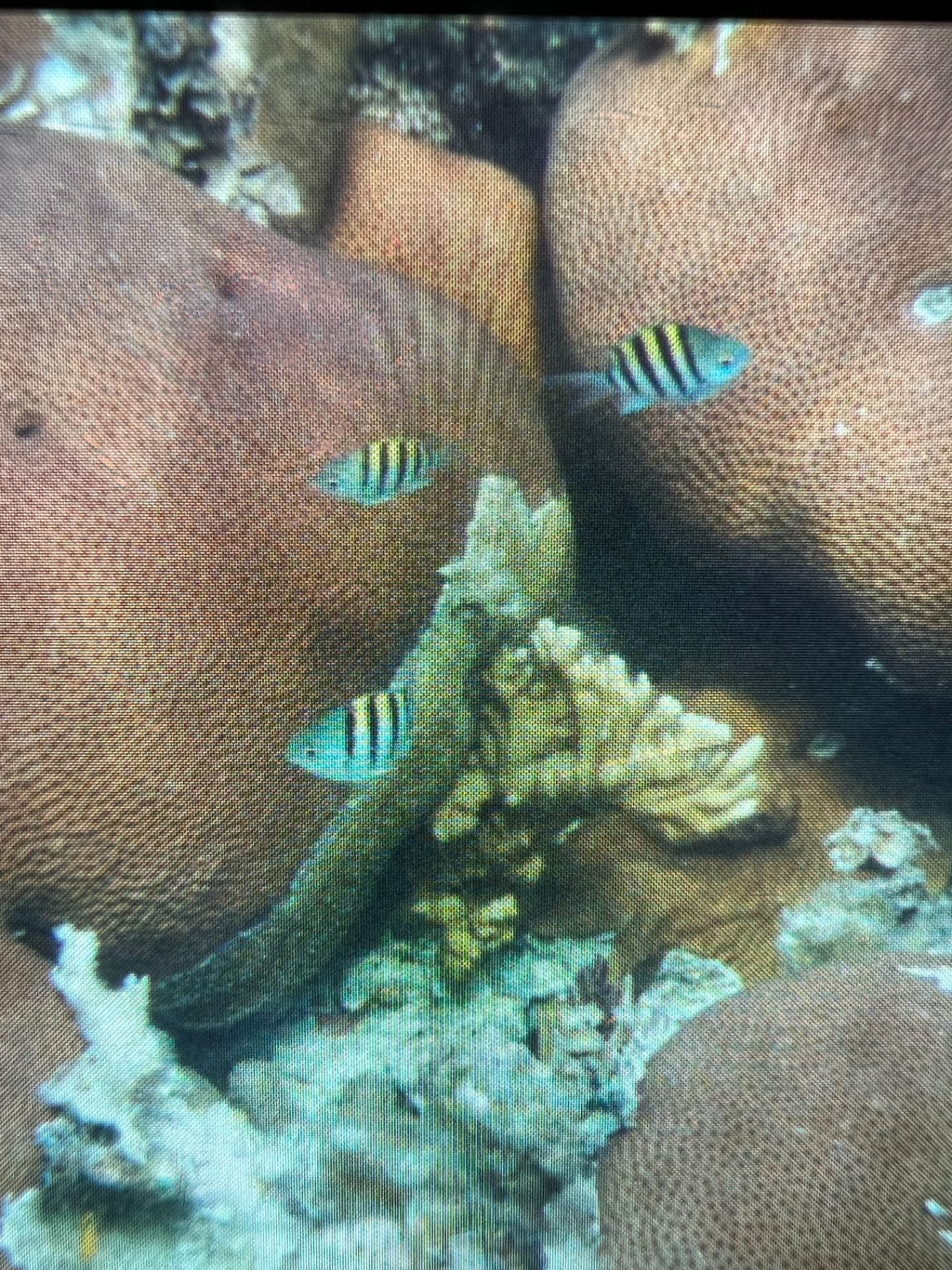
Sergeant Major
Cocoa Damselfish
Blue Chromis

Day 4 in the (mixed) bag

(EDIT:REVISED AGAIN, it’s back up and running)(EDIT as I’m in the process of writing this, the power tripped again and so we don’t have lights or fans right now either 😢)

As my title punn-ily states, today was a mixed bag. No pictures on this blog post because my camera took on water and killed the screen, and I’ve yet to see if any of my pictures from the past 4 days can be recovered from the SD card. And I had some really good pictures on there too 🙁


We were supposed to go to the fore reef this morning, but it was too windy to go out there safely, so that got postponed to another day (tbd, hopefully tomorrow morning). Our night snorkel has also been delayed because of it. The wind, despite its faults though, has made sleeping in the AC-less bunks so much more tolerable, because, you know, airflow! (I’m much too spoiled to air conditioning, I’m realizing). But today really was a beautiful day, perfect weather, and the water was stunning teal!


Our first activity was a brainstorming session to come up with our next experimental design proposal. After that we ventured out for an hour of specimen collection in the shallows behind the kitchen. We found some really cool little creatures, including a mantis shrimp (which, did you know, has 16 cones in its eyes, meaning it can probably see things and colors that we can’t even imagine), some crabs, some urchins, and in my taxon, a few queen conchs and a milk conch (which was a first for me so far!). Here’s the mixed bag part: awesome creatures, but the water smelled like poop. Straight fish manure.🤢 I was so happy to get rinsed off once we got back.

The second part of the day is where the interesting snorkeling takes place! We took a boat off of the Marine Protected Area to the West reef to execute the first part of our experimental design, data collection with transects on the reef, which was certainly interesting. We were trying to answer the question of what is the correlation of sea urchin presence and percentage of live and dead coral, and how does that change between the MPA and non-protected areas.

We don’t have a conclusion yet, but we did do the first part of data collection there. That non-MPA section was honestly really sad, with rampant disease, lots of coral rubble, and shallow waters, and my partner and I had to omit 2 of our planned measurement sites due to 1. Being unable to take the measures without brushing against fire coral, which I accidentally touched with my thigh, and 2. Our quadrat is completely broken . We also collected some sea urchins to measure and speciate them once we got back.


We then went onwards to a MPA reef, which was so much deeper and nice and much more alive. Scott speared one of the invasive lion fish. This part of the trip was amazing! I got to dive some in the beautiful water!


See what I mean by mixed bag? That describes today well.  Of course, we still had our daily lectures to expect, which I made it through tho!


Day 4 – Death to invasive lionfish!!!

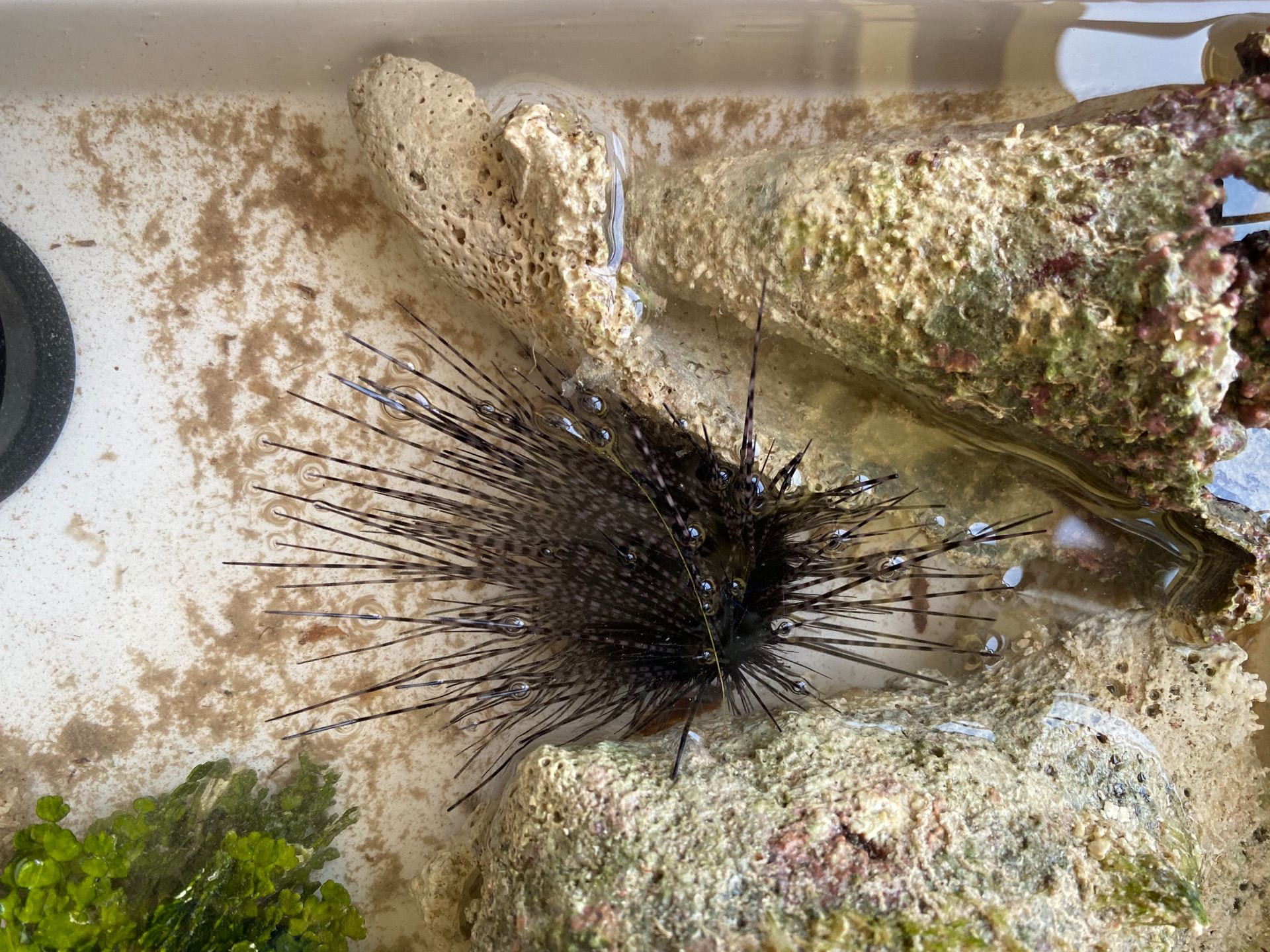
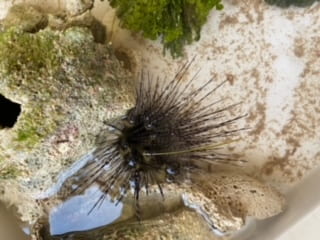
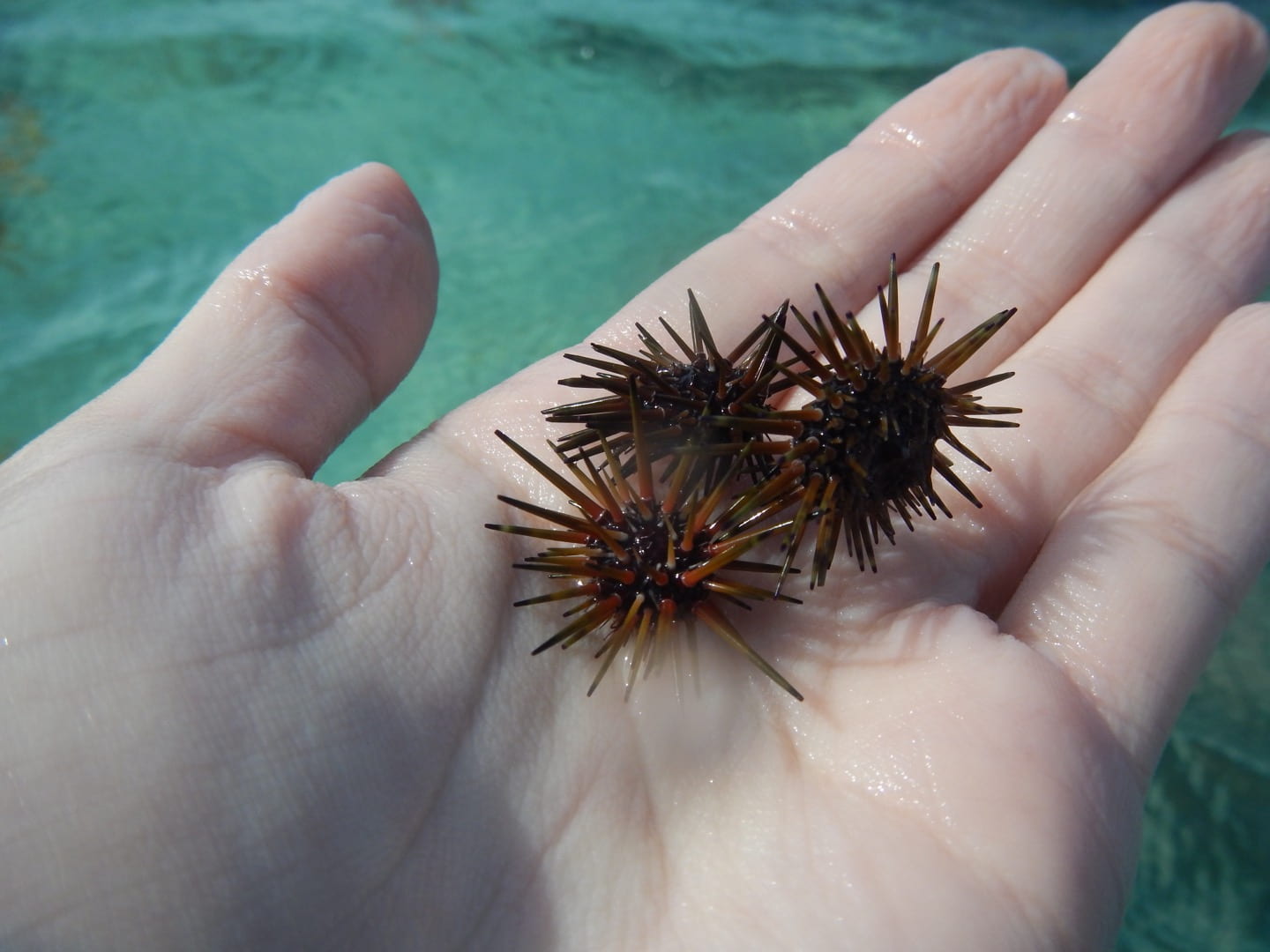
Today we took a small boat out to a reef outside the Marine Protected Area to start surveying our first large research question! We wanted to find out how live coral cover correlates with sea urchin prevalence. We went out to a shallow patch reef, and the strong waves today made it very difficult to do any surveying! I kept being accidentally washed into corals! We did get to see many sea urchins, including the Diadema antillarum, which has seen drastic population declines since the 1970s. The specimen we picked up in the field is shown in the picture below:

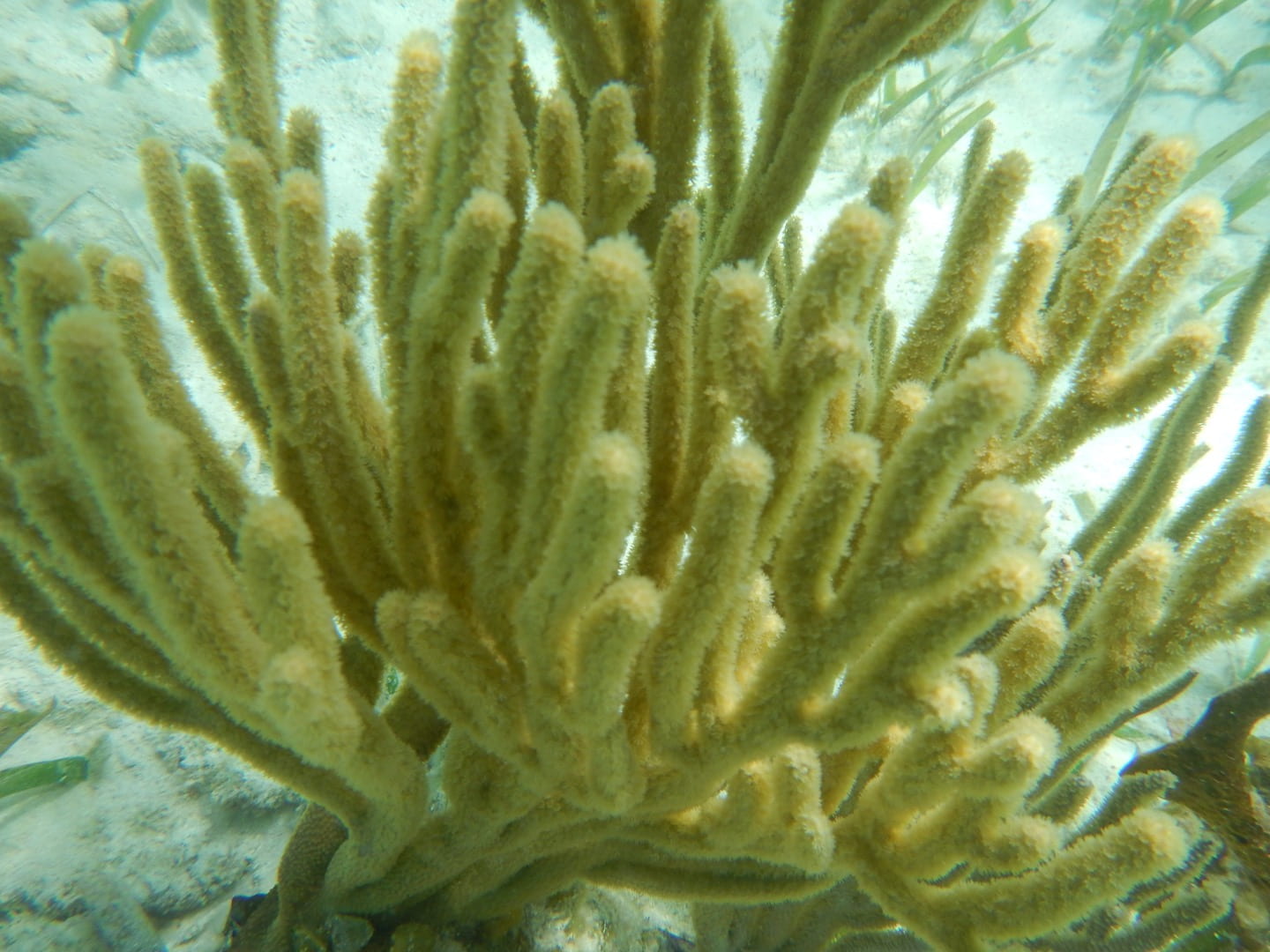
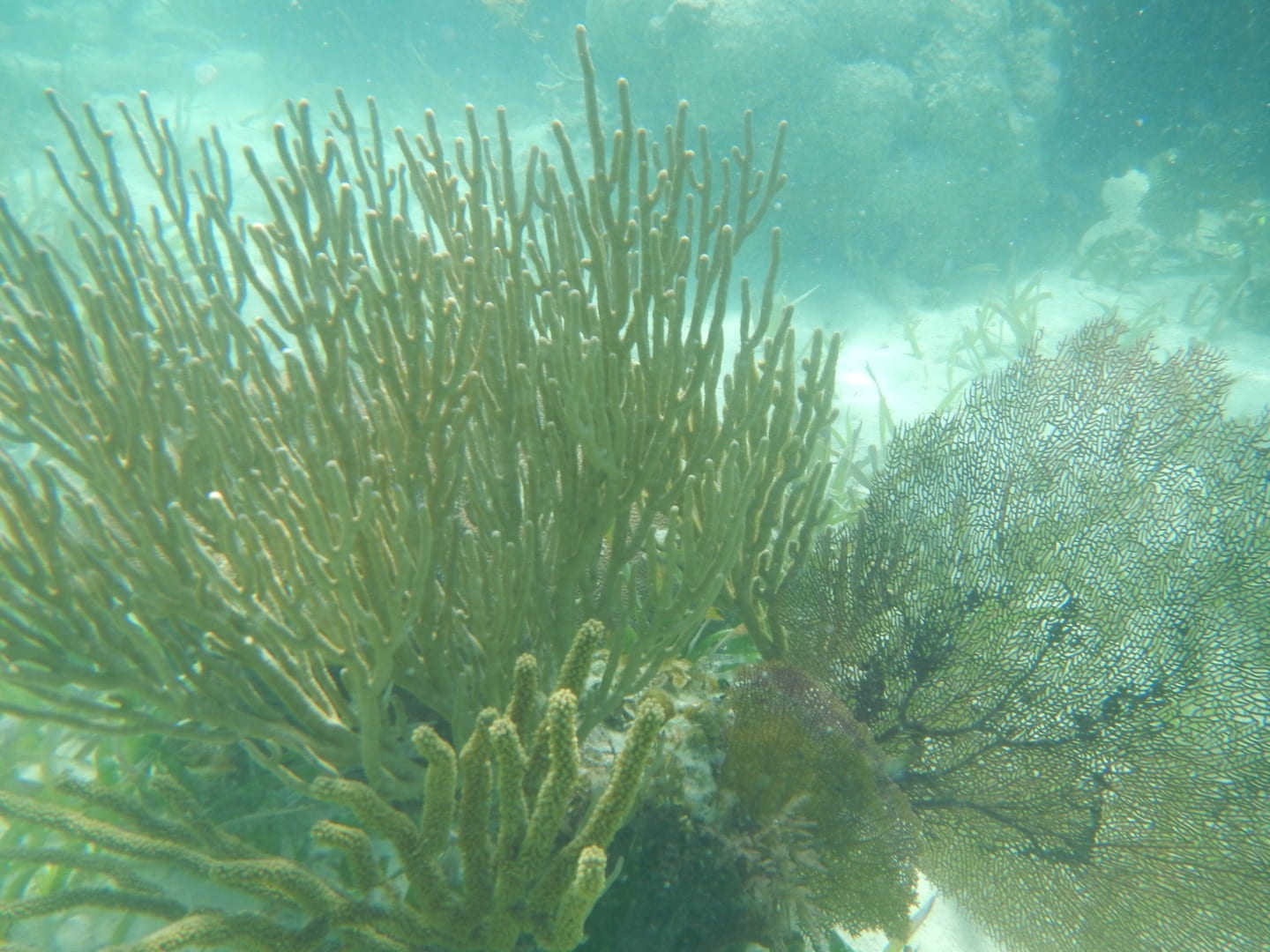
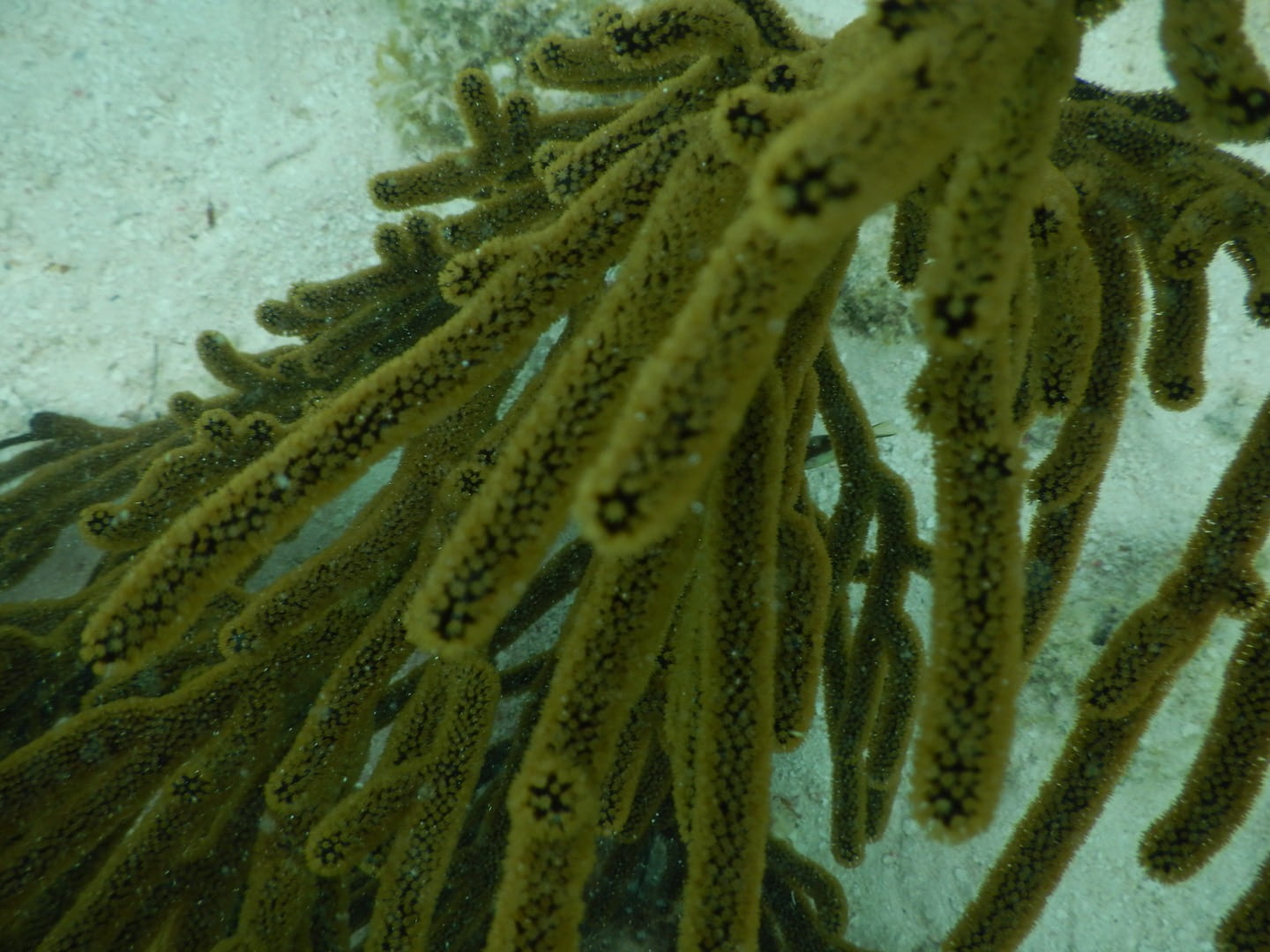
After our data collection, we visited another patch reef within the Marine Protected Area. Here I found lots of common sea fans, a soft coral, that were partially dead and diseased. I learned in a lecture today that many of them likely had the disease aspergillosis. I also saw many other soft corals that were harder to identify. Many of them have a candelabrum or bushy shape with branches coming up, and brown or tan polyps.

Here are a few I saw on the reefs today:

I think this one might be a Black Sea rod (Plexaura homomalla), as it has dark stalks with contrasting light polyps:

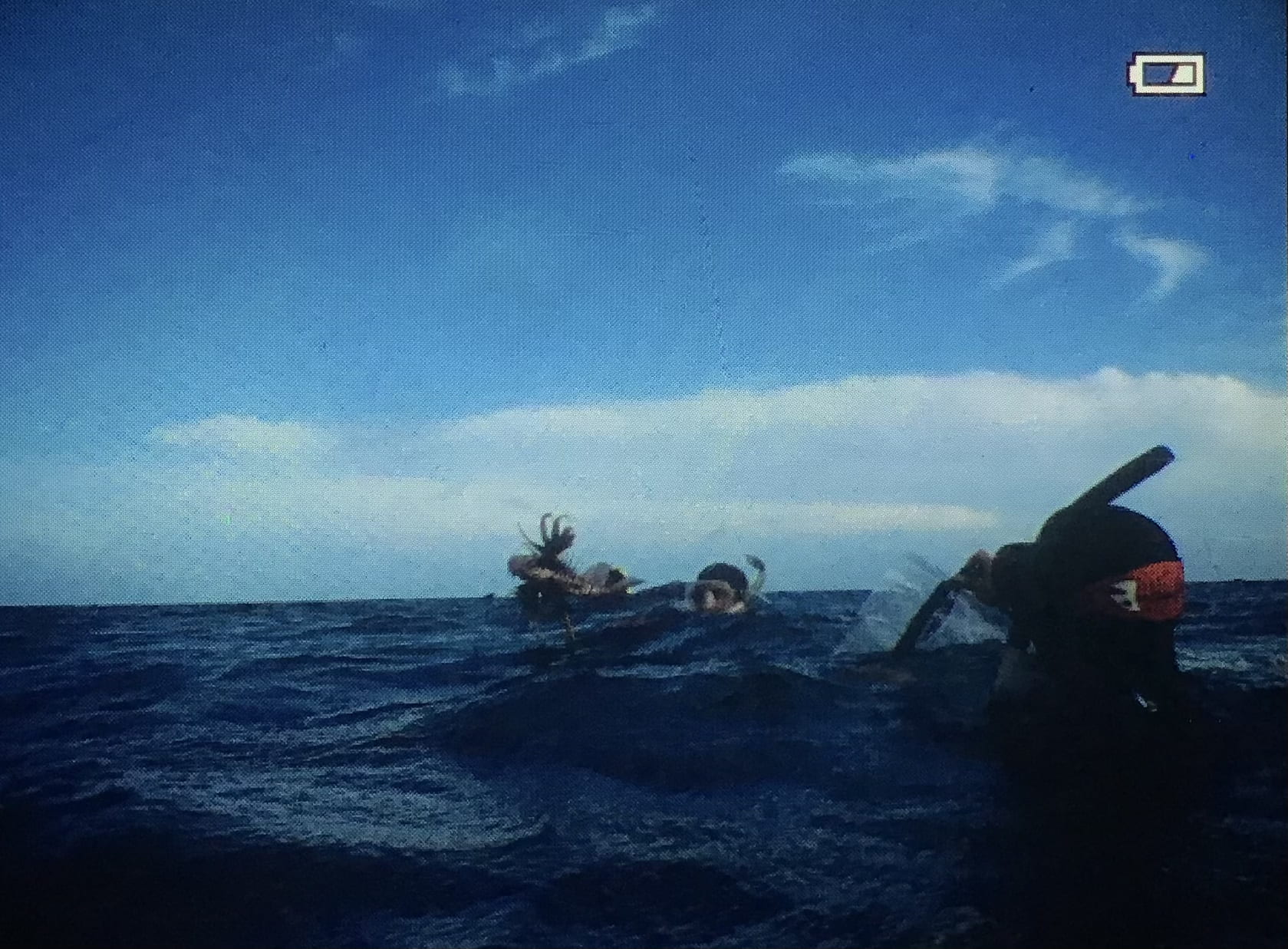
The most exciting part of today was when one of our guides, Claudius, found a giant adult Lionfish! It was around 10 inches long and very showy. Since Lion Fish are invasive to this area, and very damaging, our professors worked together to spear and capture it. Later at the station they humanely killed it, and have talked about turning it into ceviche for us to eat! Even though I am vegetarian, I think I will make an exception to help clear up the invasive Lionfish population here in Belize!

(Here is a poorly transferred picture of Scott with the lionfish speared and ready to put into the bag Adrienne is holding!)

– Ava

Reef Day 3: Lionfish = Speared

We started today with an experiment! We spent time forming a question, hypothesis, and methodology regarding percent coral coverage (live v. dead) and sea urchin abundance in MPA and non-MPA patch reefs. In the time we had before lunch and before we went out onto the boats, we did a taxa collecting activity, where we waded in shallow water and collected tons of organisms and specimens.

Once back in the wet lab, we organized them all into tubs and presented our “expert” taxon group. One cool find of note was a Diadema annularis sea urchin (DO NOT TOUCH).

After lunch, we headed out on a boat (!!) to perform our experiment (at least getting it started). We went to West Reef (non-MPA) with our transects and quadrats. After collecting data on corals, we had a timed urchin-collection period. I found three!

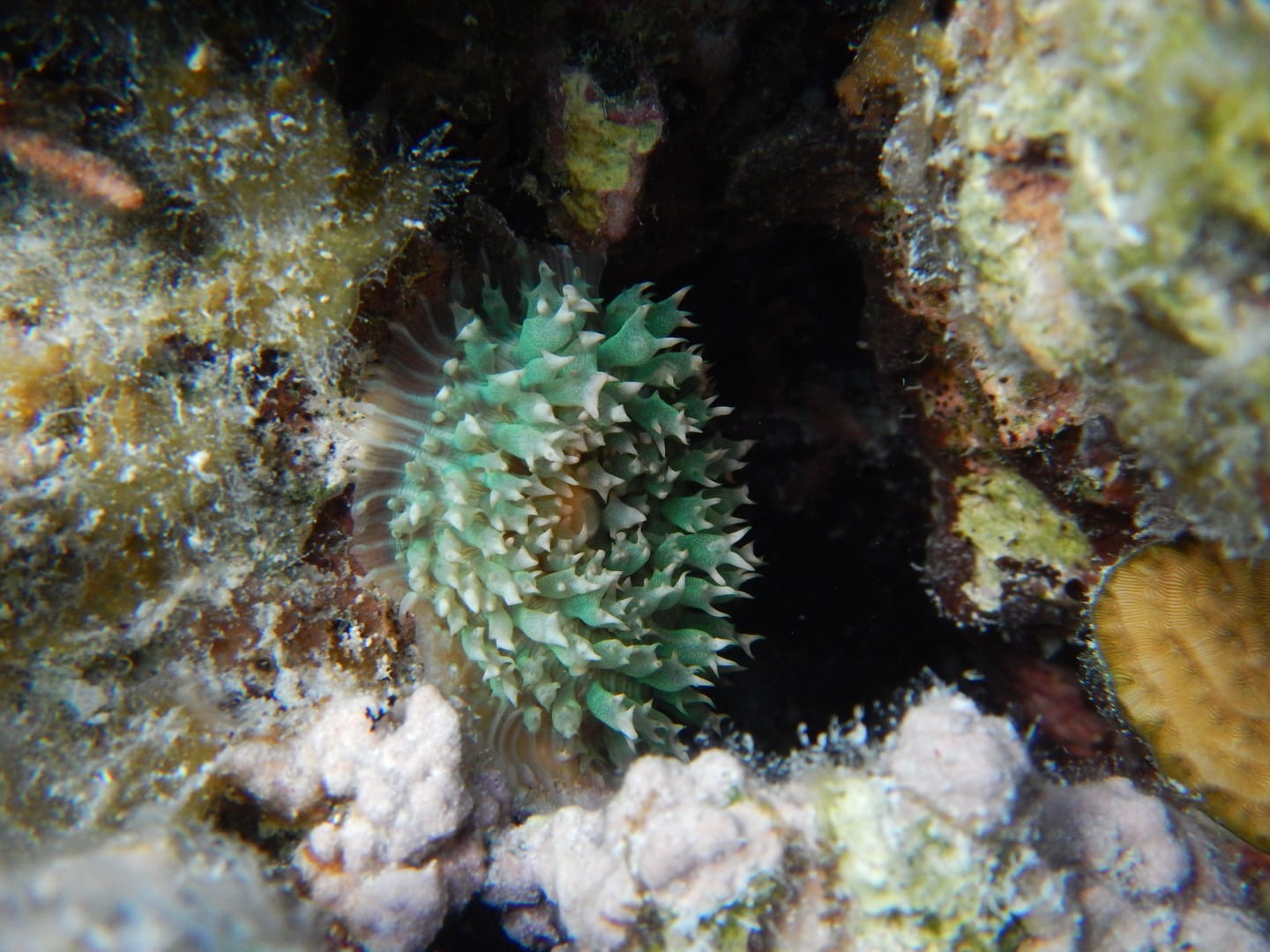
We went to a second patch reef (MPA) to explore just for fun for the sake of curiosity. Such an amazing experience! I spotted a cyan-colored (WOW!!) corallimorph and a white encrusting zoanthid (oooooo)! I finally added some variation in my spotting of my taxa.

The highlight of the day was Dr. Solomon SPEARING a lionfish and capturing it! (This is a good thing because lionfish are an invasive species in the Caribbean)

This was probably the coolest thing I’ve ever witnessed, and I know that my reef buddy Liliana (who has a passion for one day eating a lionfish) was beyond thrilled!

This experiment will be continued over at least the next day to collect more data on different patch reefs, and then I will have another picture of a poster to attach in my blog.

Here comes another night of much-needed sleep, with a slightly higher chance of having lionfish for breakfast tomorrow 🙂

– McKenna

Day 3: Penicillus Project + Coral Graveyard

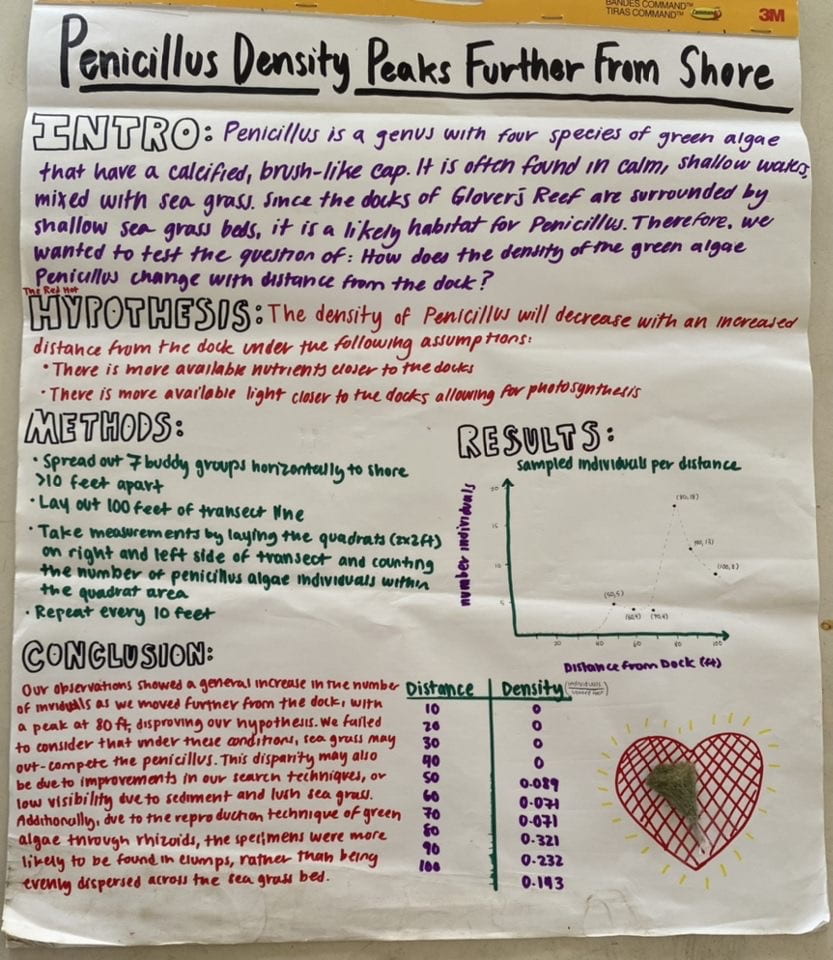
Today we started to think more like field biologists by using tools such as our quadrates and transect tapes to measure densities and volumes of objects such as coral heads! We came up with a scientific question and hypothesis to test about the green algae, penicillus. We wanted to test how the penicillus density would change as we got into deeper waters. Our class could perform this data collection if we all went vertical by shoring using our transect to measure our 100 ft from shore, and then using our quadrat to search for and identify penicillus among the sea grass. Our hypothesis was that penicillus would be more abundant in shallower waters, due to higher sunlight and more nutrients, but we were wrong. Our data supported the idea that penicillus was more abundent in deeper waters and was typically seen not solitary but in groups. We presented our evidence and conclusions to our professors and they seemed impressed for our first field biology project. Maybe some day in the future we’ll try to experimentally determine the reason for this (possibly competition with sea grass or other factors).

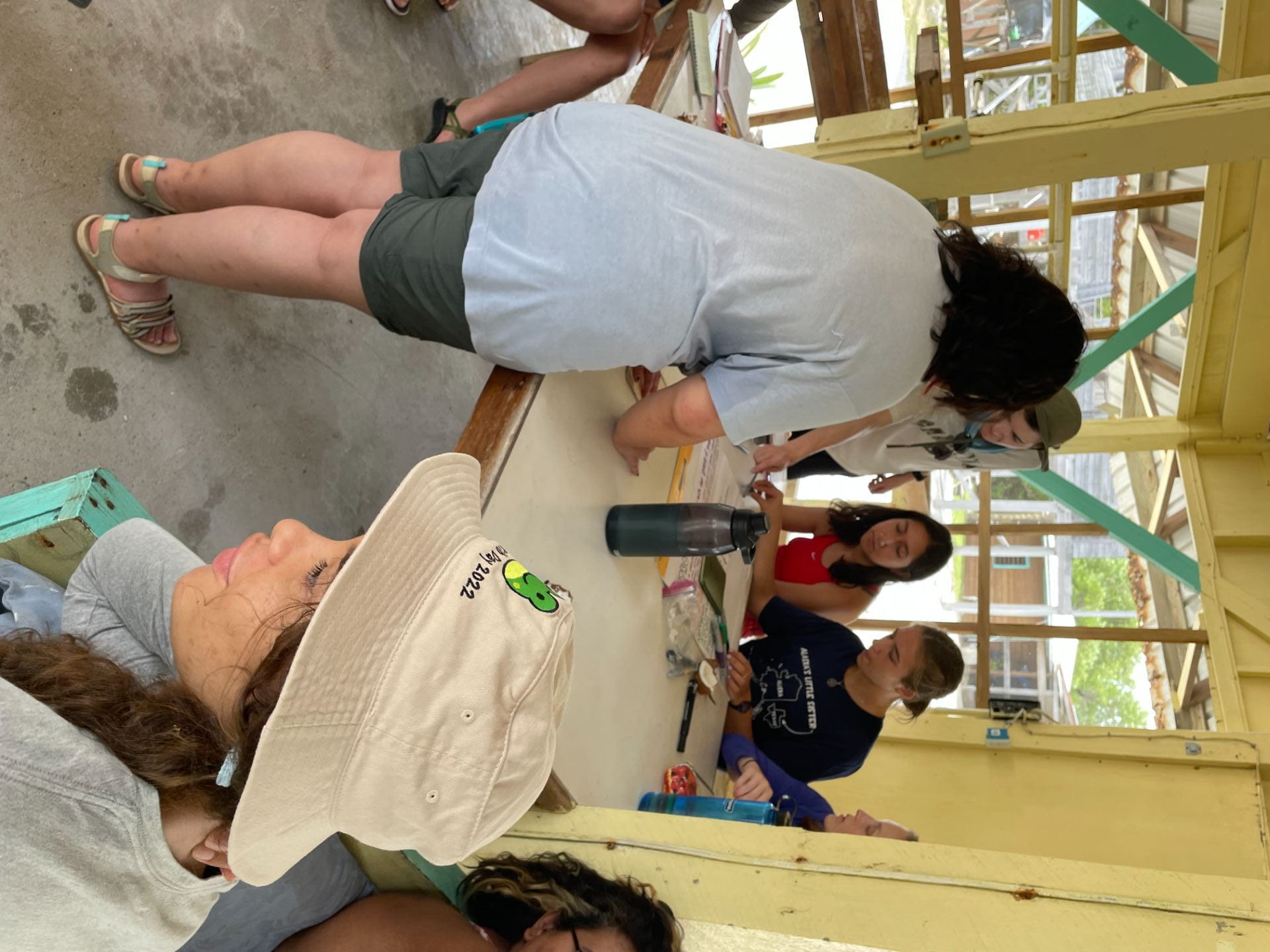
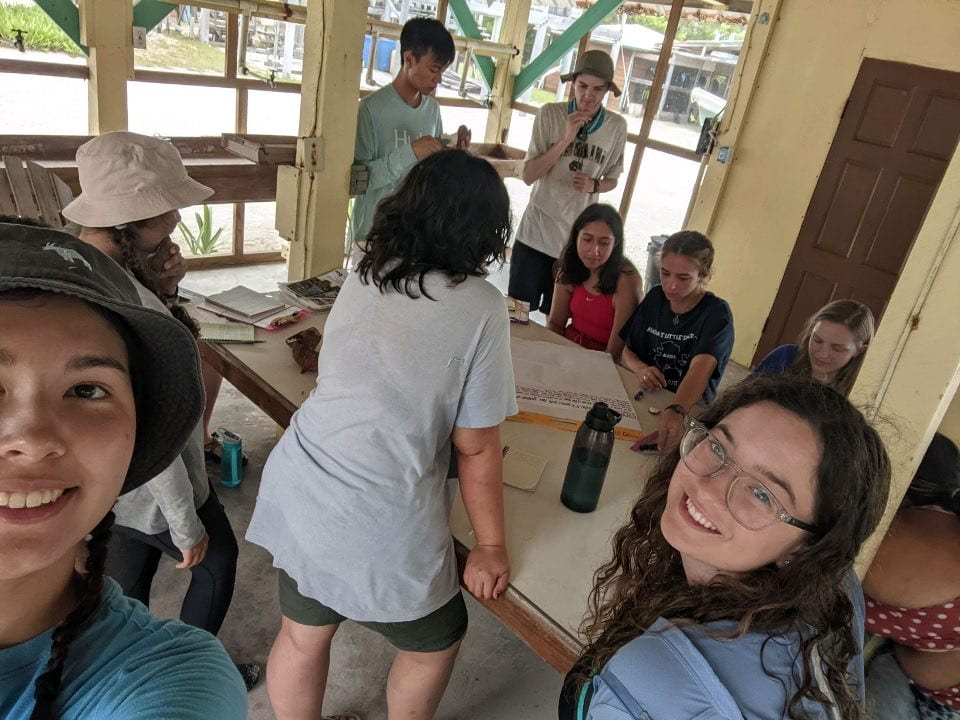
Here’s us working and discussing our presentation of our data

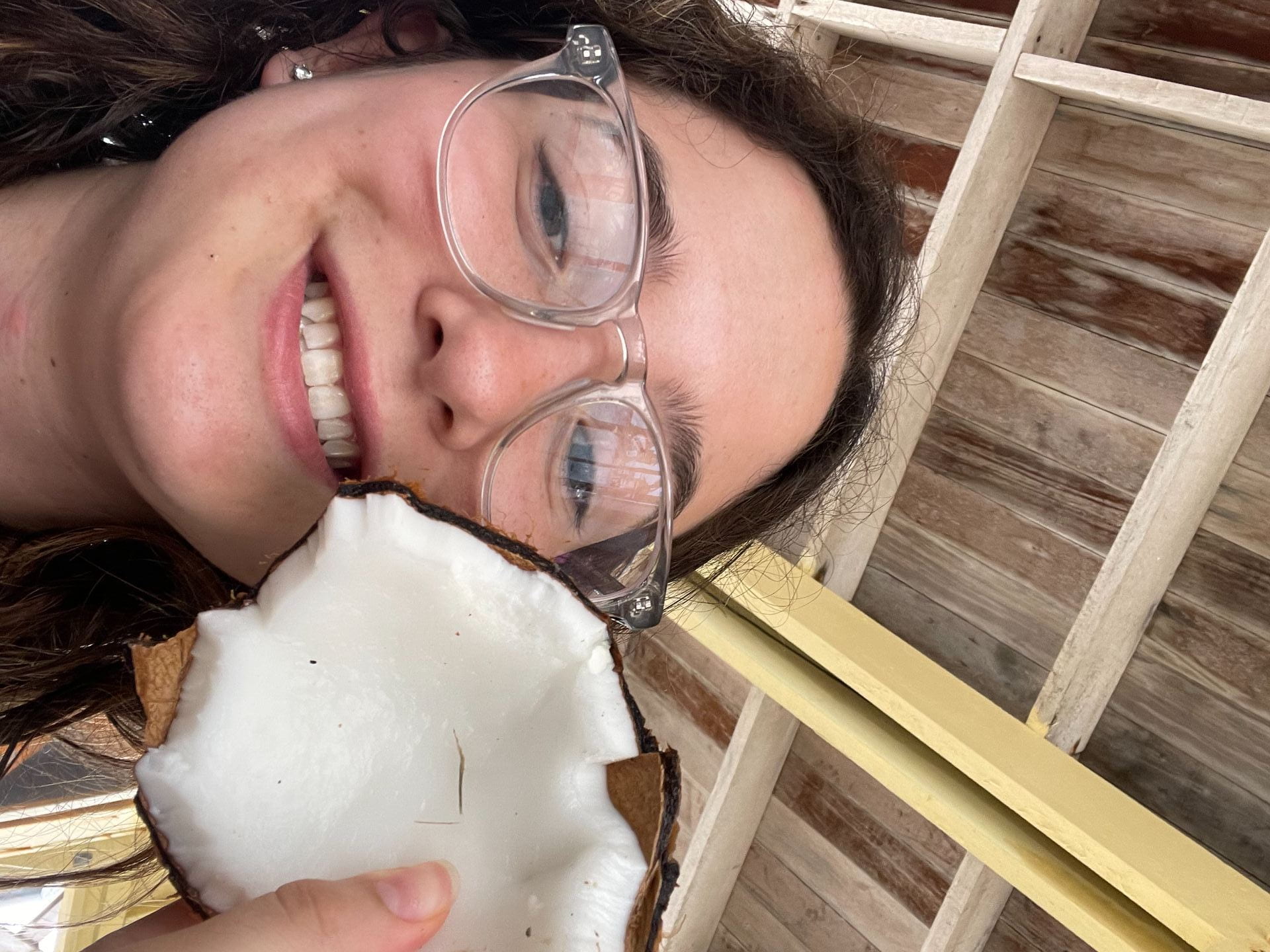
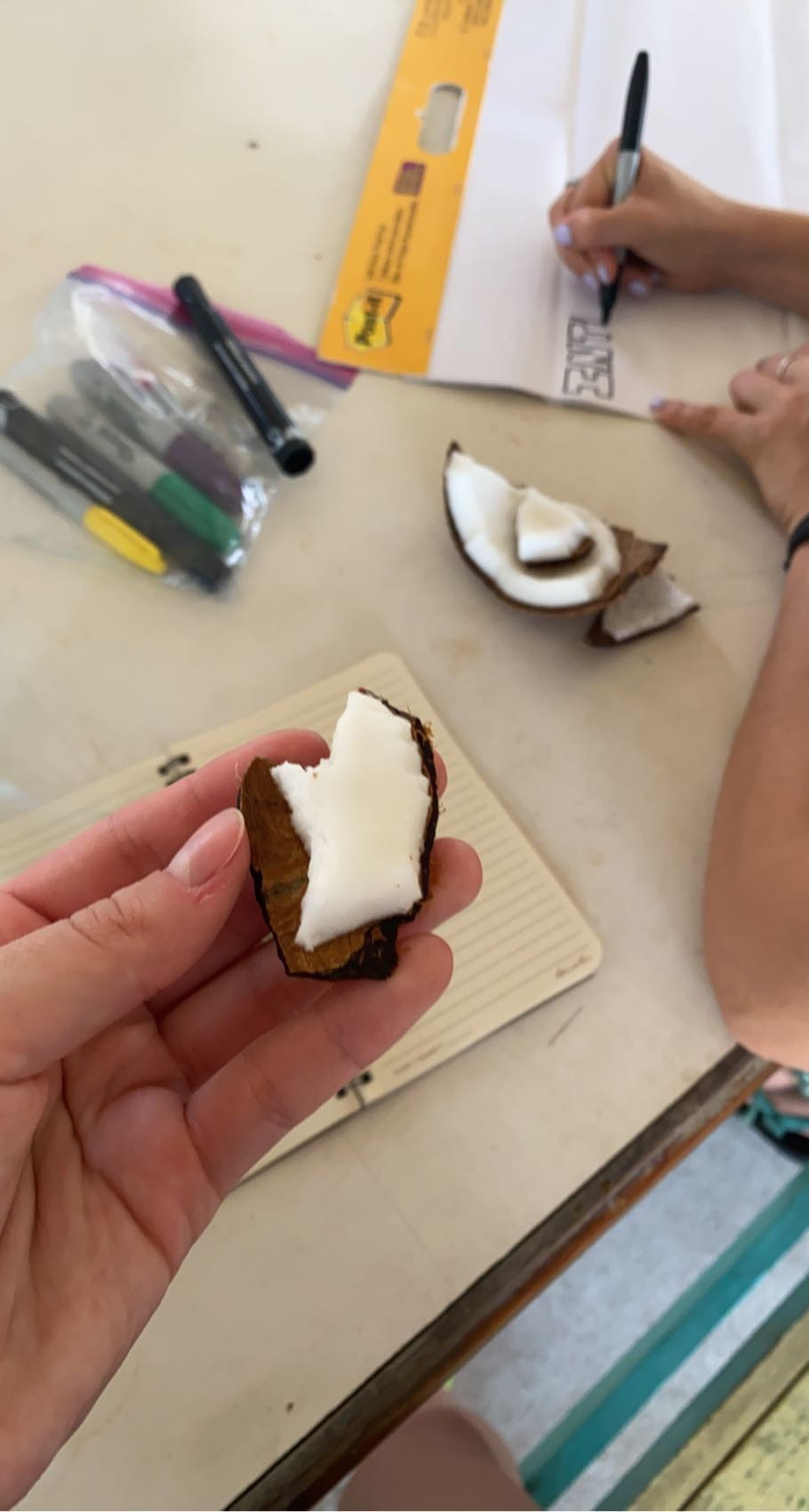
While we were working on our presentations Nyala and Caio brought us coconut meat which was a delicious snack!

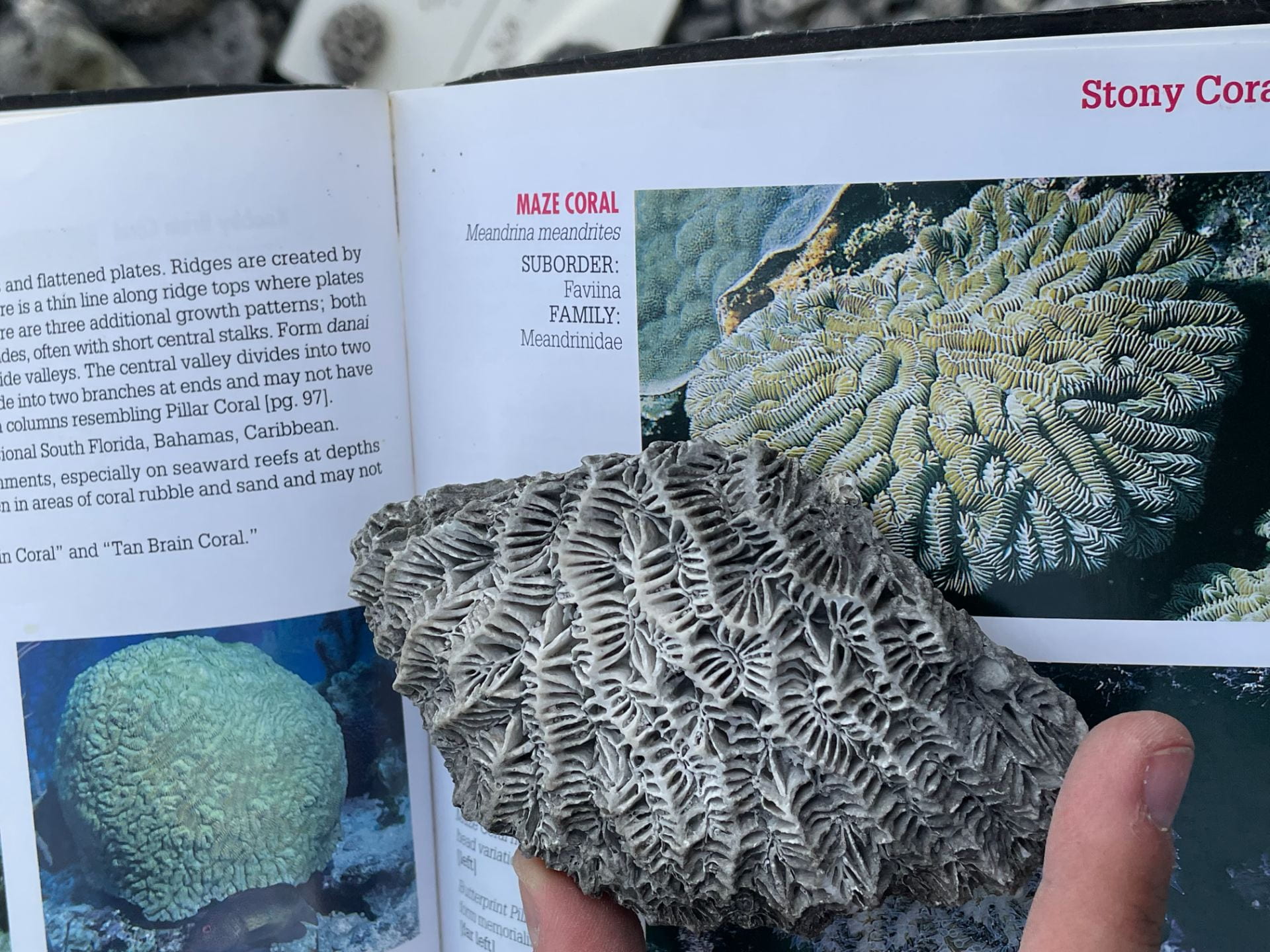
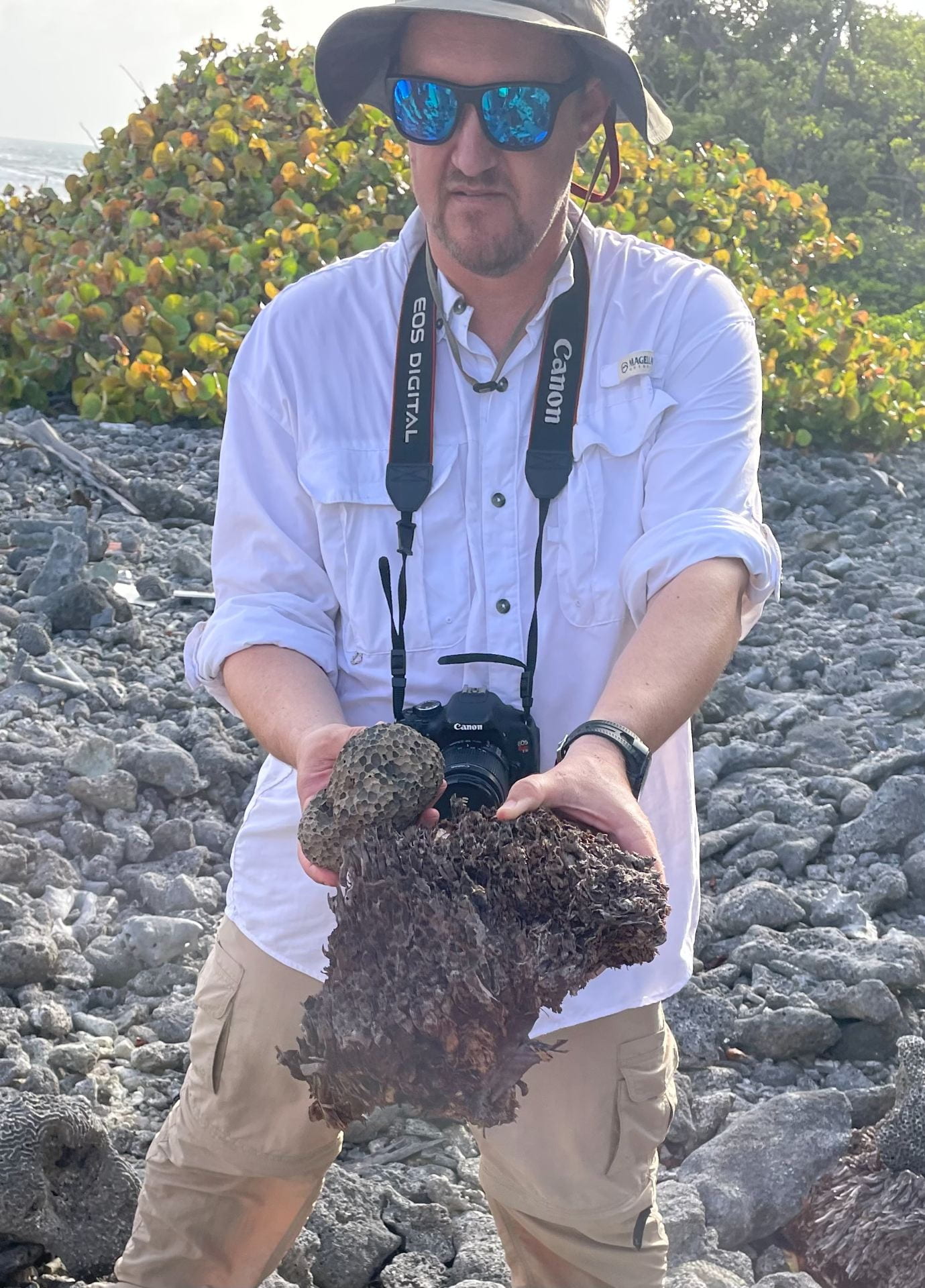
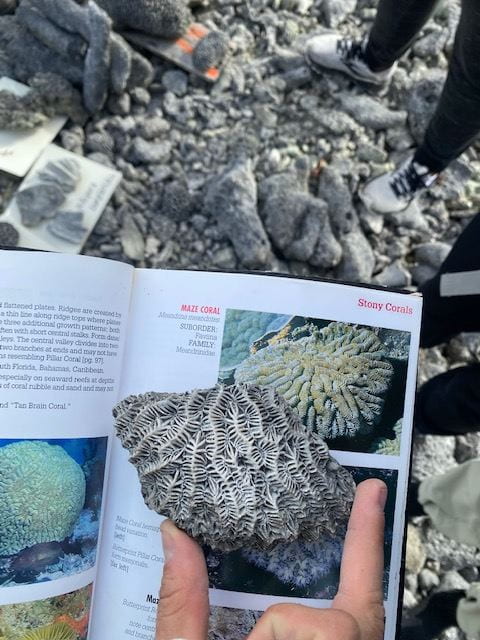
Later we visited our Professor Correa’s favorite place on earth- the Coral Graveyard. The coral graveyard has all different specimens of corals that seem to be very well preserved.  There was stag horn coral, different species of brain corals with cool patterns and ridges, and there was also a type of coral that is so rare that there has hardly been any sightings in the last 40 years (before the coral disease epidemic). It was very important that we know learn to match these corals up with live species that we may encounter in the reef! We also discovered a fossilized palm tree species which Dr. Solomon is pictured holding!

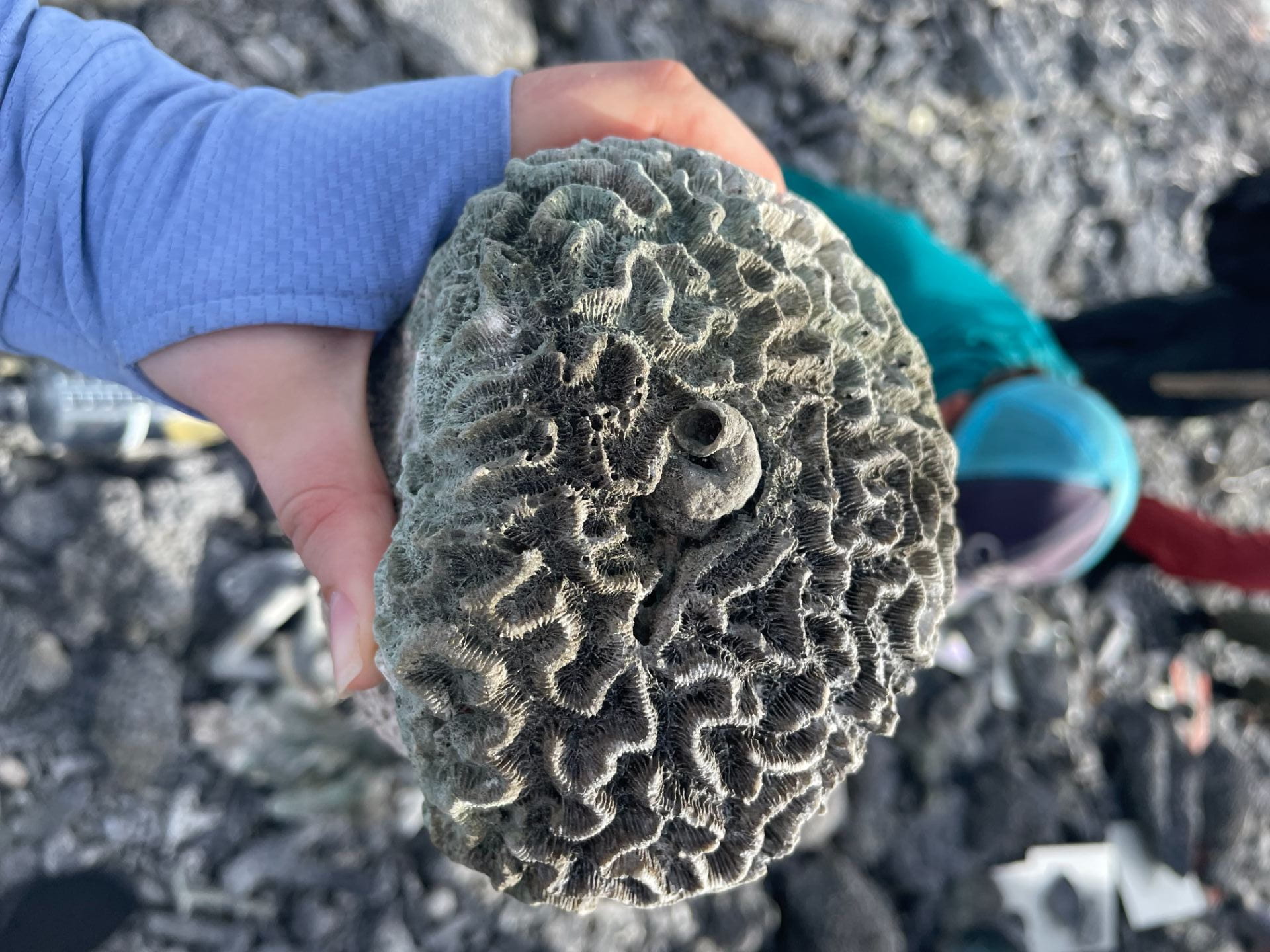
I spotted a coral specimen that had  a possible annelid boring mark. This was probably a type of worm hole! It was perfectly preserved and I wonder what type of annelid could have made that mark.

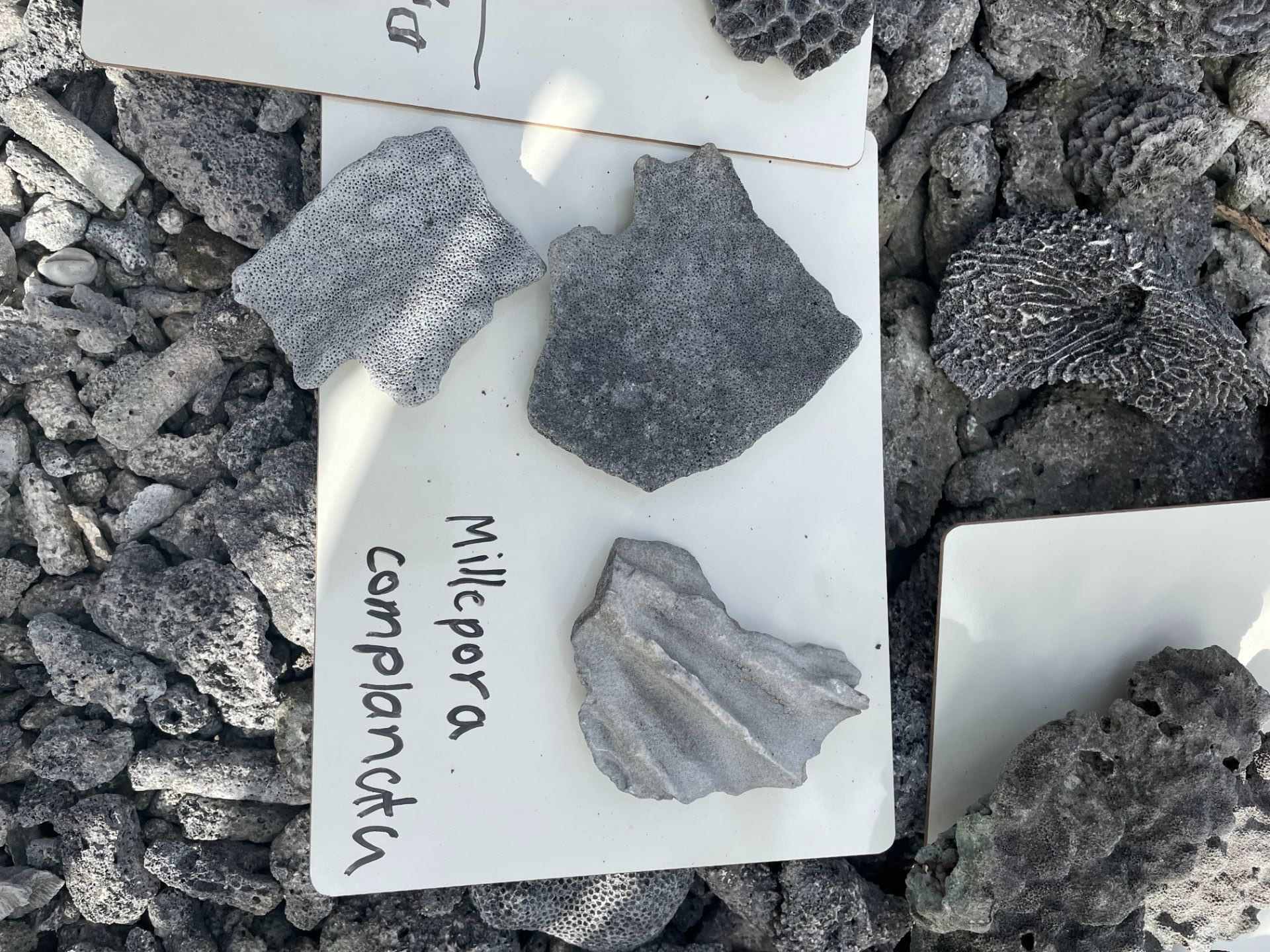
There was also some specimens of Bladed Fire Coral (millepora complanata) which is a common hydrozoan reef-building coral in Glover’s reef! Bladed fire coral has very small hair-like polyp holes compared to most other species I have encountered.

I can’t wait to see more of Glover’s tomorrow and hopefully go on a boat snorkel trip!

~Maegan

Even more things to carry!

Today we practiced using quadrants (squares grids for making observations) and super long tape measures called transects. We did a project in the sea grass about the density of one of my very own green algae: the genus Penicillus! These basically look like lollipops with tops made of super thin calcified filaments on top of a central stalk. We studied how the density of these algae changed as we moved farther from shore, finding density peaked 80m from the dock.

We also visited a coral graveyard. Where everything on the “beach” was petrified into stone! (including conch shells and palm tree remains). This meant that we could see incredibly pristine coral structures that underly the live polyps, and Dr. Correa was filled with overwhelming joy helping us distinguish the different species and explaining their characteristics.

Now, onto green algae. The sea grapes (Caulerpa Racemosa) I saw yesterday I am pretty sure were of the peltata variant based on the shape of the disc like cups. However, I found on the edge of a reef flat in a pretty sandy and sunny area, which makes me think I may have the wrong ID as the peltata variant is supposed to found in shade. 

Today I also found Udotea Flabellum in sandy shallow areas between sea grass. It had the distinctive sea fan shape and was in a pretty large group in close proximity to one another. 

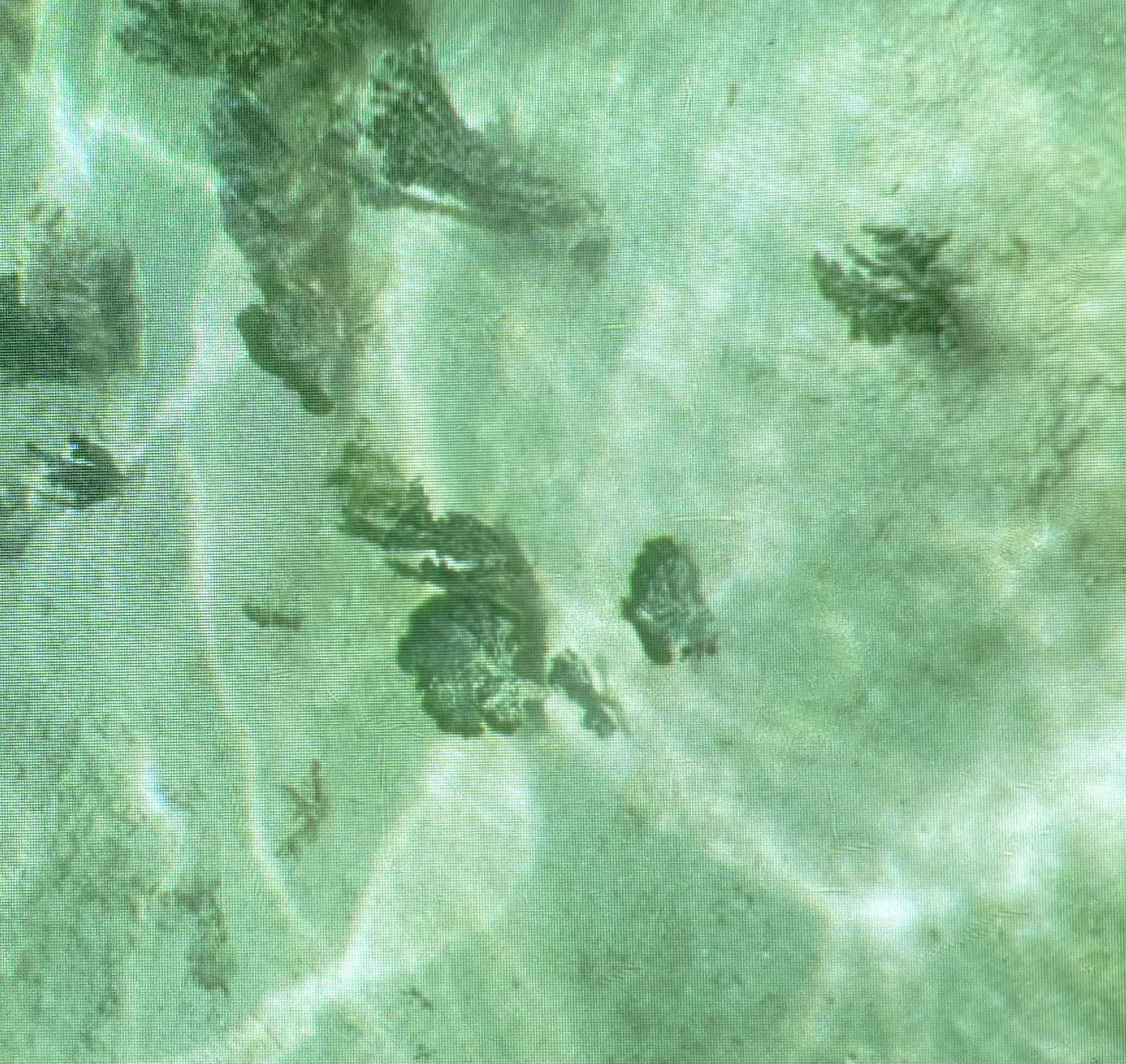
Also, our Penicillus project brought us to lots of penicillus. The species my group found I believe to be either Penicillus capitates and Penicillus lamourrouxii based on the almost spherical cap shape. They also tended to be around one another and among the sea grass, though preferring areas of less seagrass density.

Finally, I think I saw green feather algae, Caulderpa sertulariodes on one of the posts of the dock, but I want to get a closer look tomorrow to be more sure of my ID!

today powered by coconut

Today was a big day. I know you were all waiting in suspense after the cliff-hanger ending to yesterday’s blog post. Well, wait no more.

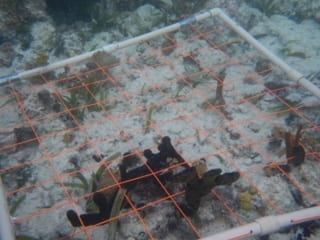
We started out the day by practicing using out quadrats (which are actually 2×2 feet-oops!). We had to come up with a scientific question that we could answer by using the quadrat. Sophia and I chose to ask what percentage of the sand is occupied by live foliage. We laid out 30 feet of transect tape, then placed the quadrat on either side every five feet, and counted the number of squares that contained a live plant. The answer we came up with was 22.7%.

The next step was to figure out a scientific question that we could answer with the quadrat in the reef, collect data, and present our findings to the professors. You can read all about it below!

Also, I must note that throughout our scientific process we were being supplied fresh coconut by the kids. #sponsored

After that, we went on a walk to the coral graveyard-Professor Correa’s favorite place in the world! It looked like a beach full of gray rocks, but upon further inspection, it turned out to be fossilized corals! We were able to identify the corals based on the shape of the calyxes (the little spot that the coral polyp inhabits). In live coral, the skeleton is covered by the tissue, so in these fossils, we could easily see the identifying markers. Some of the fossils belonged to corals that have been nearly wiped out by disease and are rarely seen in nature, so the coral graveyard was truly a special place.

I also saw some sargassum that had washed up on the shore of the coral graveyard. I think it was sargassum natans VIII, but it was hard to tell because most of it was dead. There were also some floating sargassum patches out at sea, which was cool because there aren’t any that I have seen within the lagoon.

We then came back to watch the presentations for the night. I delivered mine on nutrient pollution, overfishing, and the future of the coral reefs.

And that was it! Tomorrow we are looking to go further out via boat to see new reefs, weather allowing of course. Stay tuned!

-Elena

ps. happy graduation to my brother! (although I doubt he’s reading this)

Day 3: A walk in the graveyard

Today was day 3, and it’s crazy that we still have 11 days left on this journey. Each day has felt like 3 (not in a bad way though).


This mornings lunch was my favorite so far: some beans, bread, sausage, and spam (and some watermelon). It reminded me of something my mom would make back home, Simple but Delicious. It does seem like we’re running out of fruit though. The first couple of days, there were some delicious mangos, but alas, all of those are gone now.


After breakfast, we did an experimental design on land, which we then executed and collected data for in order to get used to using the transect tapes and quadrats. Then as a group, we designed an experiment for the water (determining the density of penicillus algae as we moved away from shore). This experiment allowed us to work with these tools in the water for the first time, and to work together as a team to develop and execute a scientific question. The experiment went well, but our hypothesis was dead wrong ☠️


During that snorkel, we also saw a starfish, a sea urchin, and a handful of mollusks! (Including a very large queen conch! 🐚)


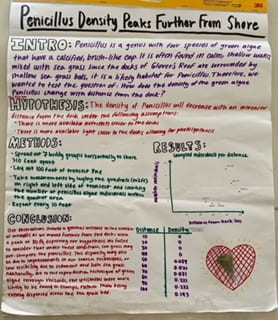
We then worked together to make a scientific poster illustrating our experimental design and results, which we presented to Scott and Adrienne once we were finished.


Lunch was a chicken burger and fries. After lunch we did another land activity: we adventured to the coral graveyard 🪦🪸! Just a hop, skip, and jump away from our bunks lies a collection of calcified coral corpses like no other. They’re so well preserved in their fossilized form that we could identify the species from the long dead skeleton corallites. We verbally identified 11 species using ID cards and books.


We had one lecture before dinner(chicken, rice, and mashed potatoes, with the other 3 coming after dinner. The night snorkel was supposed to be tonight, but the winds have picked up too much to go out safely, so we’re staying in!


Fun extra excerpt about the day: Caio and Nyala became pros at cracking open coconuts and provided coconuts to your hearts galore for the whole group. Great kids

Day 3: Itching and Experimenting

This morning I woke up at 6 AM and immediately felt itchy. A closer inspection revealed dozens of bug bites all over my arms, legs, and back. (Now I’m starting to regret trekking through the Mosquito Mangroves yesterday!)

Today we started familiarizing ourselves with the process of drafting, designing, and conducting experiments and data collection while snorkeling. We decided to determine how the density of green algae changes as we move away from the shoreline. We found the most green algae about 80 feet away from the dock.

By far the highlight of today was visiting the ‘coral graveyard’ on the other side of the island. While it sounds macabre at first, it’s actually amazing and super helpful as a crash course in identifying corals! (It helps to have a couple of coral experts and guide books with you, of course!)

I didn’t see any sponges today, but I definitely soaked up a ton of useful information about identifying common coral species for the next time we snorkel a reef.

Quadrats + Coral Graveyard

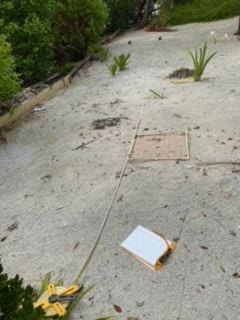
I felt like such a tropical field biologist today (with training wheels of course). We started off the day with a land activity using transects and the quadrats that we made yesterday. Liliana and I got some practice using the gear and with the methodology by gathering data to characterize what percentage of the measured area had evidence of hermit crab movement through the sand. Here is a photo! (The square is the quadrat, the line is the transect, and the orange rectangle is a very fancy dive clipboard)

Then, all of the TFBs put our heads together and came up with a question to test with this procedure out in the seagrass beds. We chose to investigate how the density of penicillus (a green algae) changes with the distance from the shore. We decided on a uniform methodology and got to work! I saw a lot of warty corallimorphs and great Caribbean sea anemones in the seagrass beds! After we collected our data in the water, we came back to the wet lab and compiled our data. We all made a poster that reflected the entire experiment, including results, discussion, and figures (one of which is a taped-on penicillus in a quadrat heart).

While working in the wet lab, I ate some freshly husked coconut as a snack!

Later in the day, we went to what Adrienne called the “coral graveyard,” and which she also described as “the most amazing place on the planet.” It really was amazing! The field of coral skeleton rubble was extremely well-preserved, and we were able to identify a lot of the species! One thing that I was particularly excited about was seeing and correctly identifying Montastraea cavernosa fragments. I took Adrienne’s coral reef ecosystems class, and my semester-long research proposal centered around this coral. It was so gratifying to get to hold a piece of its skeleton framework!

Besides the few sightings I got in during our penicillus data collection, I didn’t have a lot of time or opportunities to focus on my taxonomic group today. However, I am now so much better at recognizing great Caribbean anemones and warty corallimorphs!

Although my collection of mosquito bites has grown to be rather impressive, I can’t wait to get more if that means I can have more days like this!

– McKenna